
Web Design
Business websites designed and built to a written scope, with AED starting prices and set revision rounds.
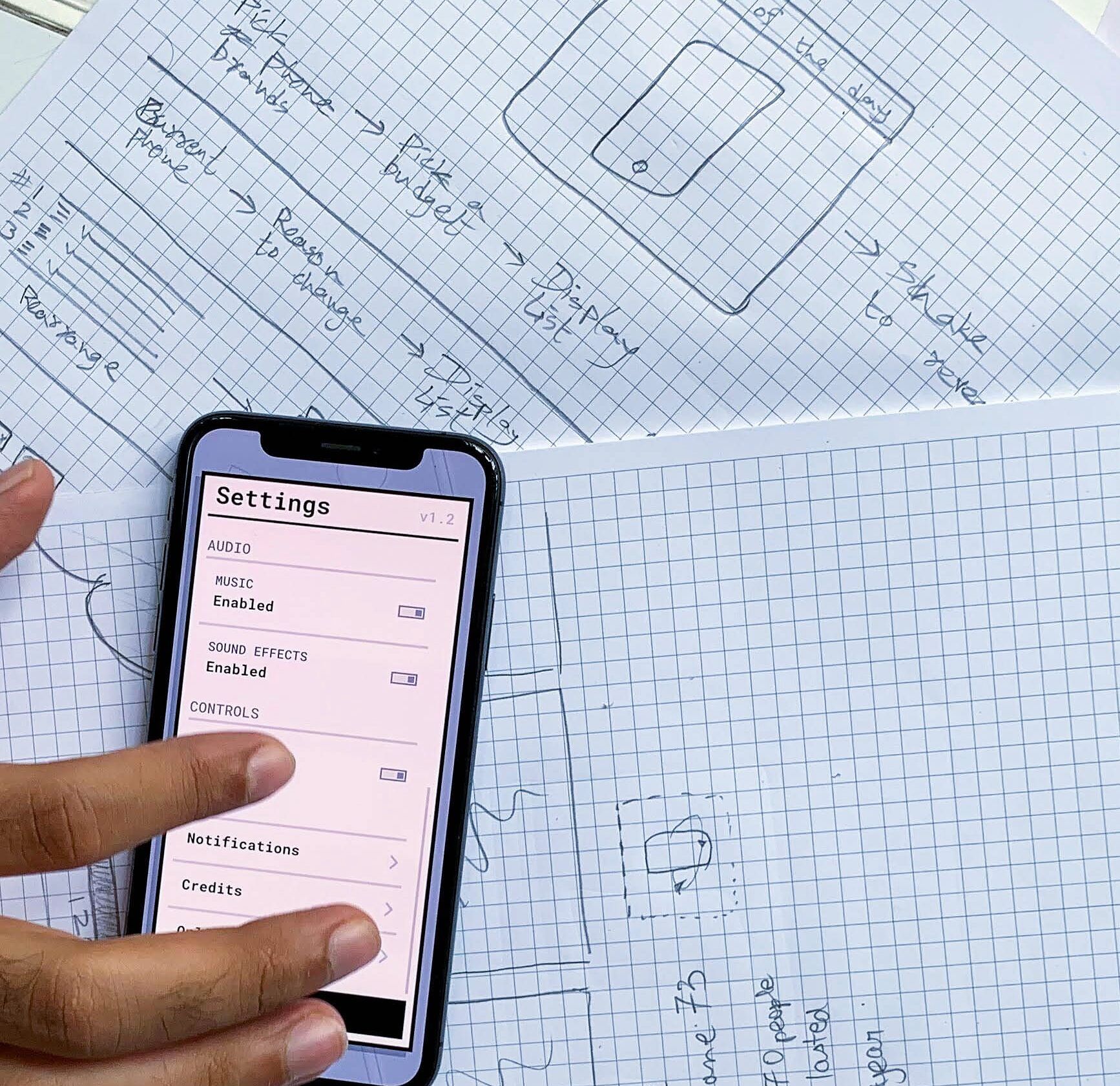
Mobile apps · Scoped individually
iOS and Android apps for businesses whose customers or staff need something a website cannot do well. We first check whether an app is the right choice, then scope and price it individually.
App or website
An app earns its cost when people use it often and need things a browser handles less well: working offline, heavy use of the camera, location or Bluetooth devices, dependable notifications, or daily access for signed-in customers or staff.
A mobile website is usually better when the goal is to be found by new customers, when most visitors come once or twice, or when the content is mainly information. Websites appear in search results, need no download or store approval, and work on any phone with a browser.
If a responsive website would meet your needs, we will say so; our web design service and website packages cover it.
Approach
Both produce real apps for the App Store and Google Play. The right one depends on what the app must do and how long you plan to run it; your proposal explains our recommendation.
| Cross-platform | Native | |
|---|---|---|
| Code | One shared codebase for iOS and Android | A separate codebase for each platform |
| Cost for both platforms | Usually lower, as most code is written once | Usually higher, as much of the work is done twice |
| New platform features | Available once the framework supports them, or through extra native code | Available as soon as Apple or Google release them |
| Typical fit | Most business apps: forms, accounts, catalogues, dashboards | Graphics-heavy or hardware-intensive apps |
| Maintenance | One codebase, plus regular framework upgrades | Two codebases to keep up to date |
| Common tools | Flutter, React Native | Swift for iOS, Kotlin for Android |
Scope
Your proposal lists which of these are in scope; anything not listed is excluded.
Publishing
Your app is published through your own Apple Developer and Google Play Console accounts, not ours. The listings, statistics and any in-app revenue stay under your control, and you can change developers without moving the app. Apple and Google charge their own account fees, which you pay directly.
Both stores verify organisation accounts before you can publish, so we ask you to start early. Each store also reviews every new app and update against its guidelines. We build to those guidelines and allow time for review, but approval and its timing are the stores’ decision, so we cannot promise either.
After launch
Budget for upkeep from the start. It can be quoted as a separate monthly arrangement listing its tasks, or handled by your own developers.
Apple and Google release major iOS and Android versions every year. Apps need testing, and sometimes changes, to keep working on them.
Both stores raise their technical requirements from time to time. An app left without updates becomes harder to update and may stop being offered to new users.
Third-party libraries, payment providers and APIs release new versions and retire old ones, and the app has to keep up.
Servers, databases, notification services and developer accounts are ongoing costs paid directly by you, and your proposal lists them.
FAQ
It depends on the number of screens, whether you need iOS, Android or both, whether the app needs its own back end, and which systems it connects to. We price it from a written specification, with a fixed price for that scope. Describe the app in the quote form to start.
Larger apps can be split into phases, starting with a first version that does the core job well. Our guide to website costs in Dubai sets out a way to compare quotes like for like, and the same method works for app quotes.
Yes, where it is scoped. The Arabic version is localised for UAE users, adapted rather than translated word for word and reviewed before release, and the interface is built right-to-left, including navigation, directional icons and text entry. Our guide to bilingual Arabic–English websites explains the localisation and right-to-left principles, which apply to apps as well.
Usually, yes. A website helps new customers find you through search, while the app serves people who already use your services. It also hosts the privacy policy and support pages the app stores expect. Custom software covers the portals and integrations an app often relies on.
Your proposal gives an estimated schedule for each milestone once the specification is agreed. Store review then adds time outside our control.
Possibly. We first review the code, the accounts it runs on and how it is published, then tell you in writing whether continuing, rebuilding or retiring it makes more sense.
Related
Business websites designed and built to a written scope, with AED starting prices and set revision rounds.
Dashboards, portals, integrations and workflow automation, scoped individually and priced in a written proposal.

Logos, identity systems, Arabic–Latin typography, brand guidelines and UX/UI support, scoped individually.
Next step
Describe what users need to do and on which devices. We reply by email with questions and, if an app is the right choice, a written proposal with a fixed price for the agreed scope.